Sem - 2 2/July/ 2018
Electrician (Practical) – Semester II
Session: 2017–2018 | NSQF Level: 5
Time: 8 Hours
Maximum Marks: 270
Note: Attempt any three questions. All questions carry equal marks.
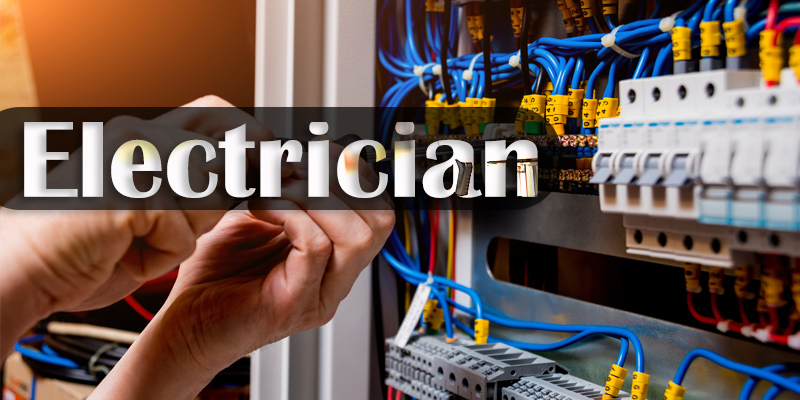
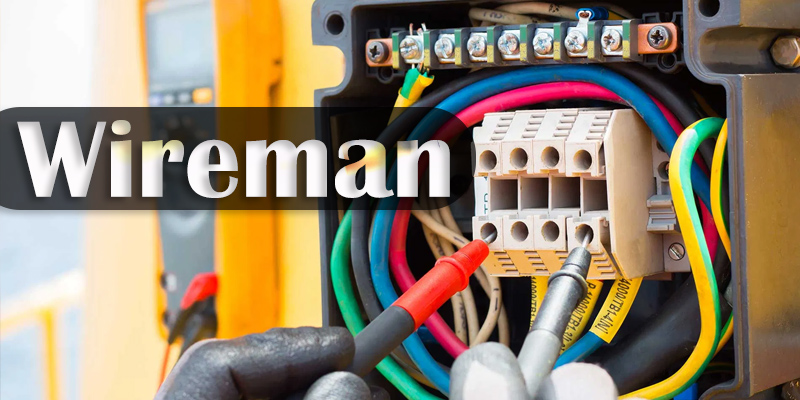
This two-year Electrician trade course is offered under the Craftsman Training Scheme (CTS) by the National Council for Vocational Training (NCVT). It trains students in electrical installation, maintenance, and repair, preparing them for roles such as electrician, wireman, or electrical technician.
The course includes:
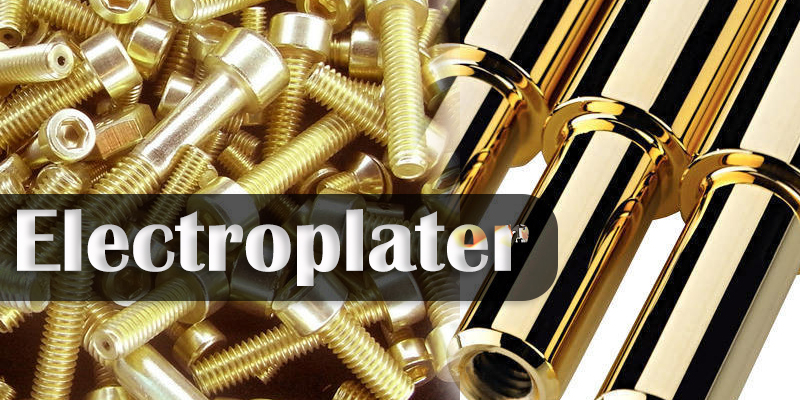
The ITI "Electroplater" trade is a two-year vocational training program under the Craftsman Training Scheme (CTS), governed by the National Council for Vocational Training (NCVT). This course equips trainees with skills in electroplating techniques, surface preparation, and the application of protective and decorative coatings on metal surfaces.
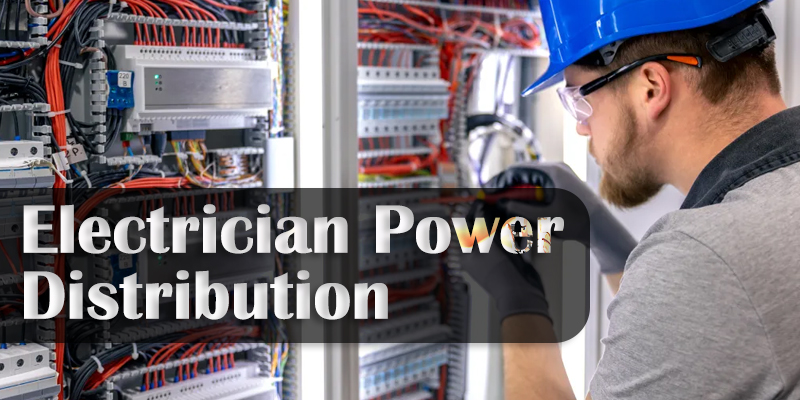
The Electrician (Power Distribution) ITI trade is a 2-year NSQF Level 4/5 course focused on installing, operating, maintaining, and repairing electrical power distribution systems. It covers transformers, overhead lines, underground cables, switchgear, and safety procedures, preparing technicians for roles in electricity boards, utilities, and industries.
Key Details
Session: 2017–2018 | NSQF Level: 5
Time: 8 Hours
Maximum Marks: 270
Note: Attempt any three questions. All questions carry equal marks.
In small transformers, the choice of winding materials is critical to ensure efficiency, reliability, and thermal stability. Different materials are selected based on their electrical conductivity, mechanical strength, and thermal endurance. 🌟
In three-phase power systems, it is common to use either a single three-phase transformer or three single-phase transformers connected together to achieve the required three-phase operation. When using three single-phase transformers, various connection methods are employed to suit different applications. Let’s explore the major connection methods! ⚡⚙️
In electrical systems, understanding concepts like **Voltage Regulation**, **Efficiency**, and **Auto Transformers** is critical for ensuring the optimal performance of electrical equipment. Additionally, the usage of **Instrument Transformers** such as **Current Transformers (CT)** and **Potential Transformers (PT)** plays a significant role in accurate measurement and protection systems. Let's explore these concepts in detail. 🔌⚙️
The operation of transformers in series or parallel configurations is an essential concept in power systems, especially for large-scale power distribution. Transformers can be connected in either **series** or **parallel** to handle different types of load demands. In this section, we will discuss the series and parallel operation of transformers, their advantages, and applications. ⚡🔋
A transformer is an essential electrical device used to step up or step down voltage in alternating current (AC) circuits. The **turn ratio** and the **electromotive force (E.M.F.) equation** are key concepts in understanding how transformers function. Let's dive into these concepts and understand their significance. ⚡🔌
A transformer is an essential electrical device used to change the voltage levels in alternating current (AC) circuits. Transformers can be classified into two main categories based on the number of phases in their operation: **Single Phase Transformers** and **Three Phase Transformers**. Both types are vital for different applications, and understanding their differences is crucial for selecting the right transformer for a particular job.
A **transformer** is an electrical device used to change the voltage level in an alternating current (AC) electrical circuit. It operates on the principle of **electromagnetic induction** to increase or decrease voltage levels without changing the frequency. Transformers are used in a wide range of applications, from power distribution to electronic devices. This article explores the working principle, construction, and classification of transformers. 🔌🔧
In lighting design, understanding the lumens and efficiency of a lighting system is crucial for achieving optimal lighting performance while minimizing energy consumption. 🌍⚡
A lumen (lm) is the unit of measurement for the total quantity of light emitted by a light source. It is used to express the brightness of a lamp or light source. The higher the lumens, the brighter the light. 💡
In electrical systems, the terms **Neutral** and **Earth** (or **Ground**) are fundamental concepts for ensuring safety, stability, and proper functionality. Both components play critical roles in protecting electrical systems and the people who interact with them. In this article, we will explore what Neutral and Earth are, how they work, and their importance in electrical installations. ⚙️🔌
Electrician + Wireman + Electroplater + Electrician Power Distribution + Lift and Escalator Mechanic | ITI Fitter | ITI COPA | ITI Welder | ITI Mechanic | ITI Electronics | Agriculture + Horticulture + Floriculture | ITI Draughtsman Civil & Mech | ITI Refrigeration & Air Conditioning | ITI Turner | ITI Plumber | ITI Machinist | ITI Cosmetology | ITI Sewing | ITI Surveyor
Copyright © 2026 ITI Directory - All rights reserved
Developed and Designed by ITI Directory