

WIREMAN Course Information
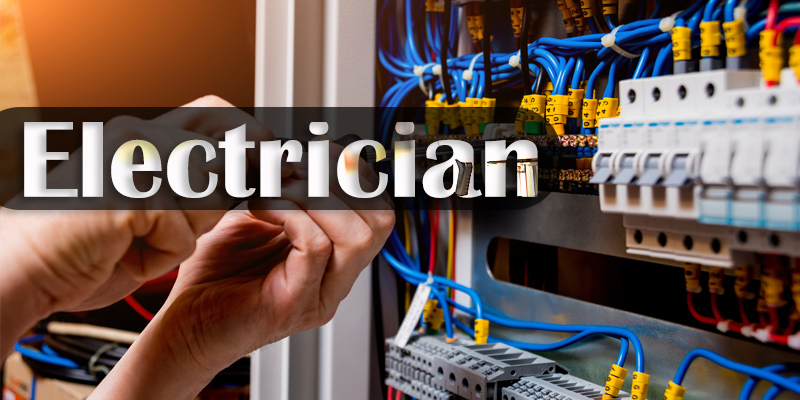
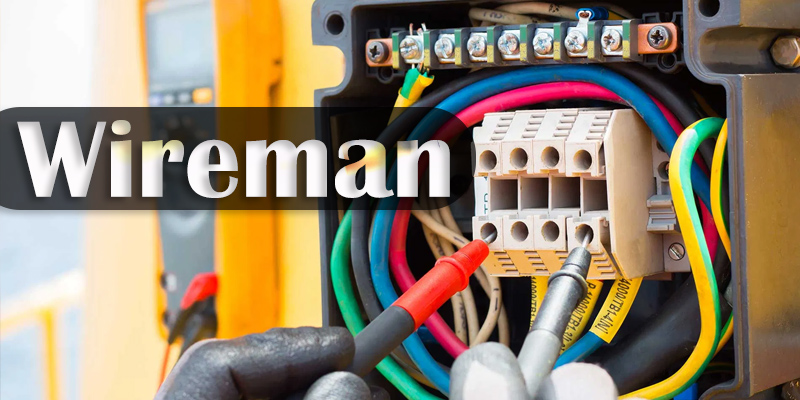
The Wireman trade is a vocational training program offered under the Craftsmen Training Scheme (CTS) by the Directorate General of Training (DGT), Ministry of Skill Development and Entrepreneurship, Government of India. This course is designed to train candidates in electrical wiring installation, maintenance, and troubleshooting of electrical systems used in residential, commercial, and industrial environments.
The duration of the Wireman course is two years. During this period, trainees gain knowledge of electrical circuits, electrical machines, power systems, wiring techniques, and modern electrical technologies. The program combines theoretical knowledge with extensive practical training to develop skilled technicians capable of handling electrical installations and maintenance work safely and efficiently.
The training program includes three major learning components: Professional Skill (Trade Practical), Professional Knowledge (Trade Theory), and Employability Skills. Professional Skill training focuses on hands-on experience with electrical wiring, electrical equipment, and tools. Trade Theory provides understanding of electrical laws, circuits, machines, and safety rules. Employability Skills focus on communication, teamwork, and workplace behavior required in professional environments.
In the first year of the course, trainees are introduced to electrical safety procedures, environmental awareness, fire-fighting techniques, and first aid practices. They learn basic workshop activities such as filing, drilling, riveting, and fitting. These activities help develop the fundamental technical skills required for electrical installation work.
Students also learn about different types of electrical conductors and cables. They practice preparing wire joints and perform electrical connections using crimping, soldering, and brazing methods. Understanding these connection techniques is essential for creating safe and reliable electrical wiring systems.
The course also introduces trainees to important electrical laws such as Ohm’s Law and Kirchhoff’s Law. They learn to measure electrical parameters such as voltage, current, and resistance using electrical measuring instruments. Trainees also learn about the generation, transmission, and distribution of electrical power.
During the second year, the training focuses on advanced electrical installations including commercial and industrial wiring systems. Trainees learn to install lighting systems, control panels, CCTV cameras, and inverter systems. They also gain knowledge about renewable energy technologies such as solar power systems and solar appliances.
Another important part of the training is repairing electrical appliances such as fans, washing machines, geysers, and water pumps. Students also learn the winding of small transformers and electric motors. These skills enable trainees to work in electrical maintenance and repair services.
The course also introduces modern technologies such as electric vehicle charging systems and smart wiring concepts used in automation and Internet of Things (IoT) applications. By the end of the course, trainees gain the ability to install, test, and maintain various electrical systems used in modern industries.
After successful completion of the course and passing the final examination conducted by the Directorate General of Training, trainees are awarded the National Trade Certificate (NTC). This certificate is recognized across India and helps candidates obtain employment in electrical industries, construction companies, maintenance services, and power distribution sectors.