



Skip to header Skip to main navigation Skip to main content Skip to footer

User account menu

  • Log in
Home
Electrician ITI
ITI Trade Electrician, Wireman

Main navigation

  • Home
  • Book
  • Question Paper
  • Trade Syllabus
  • वायरमैन
    • WIREMAN Assessment Criteria
    • WIREMAN Course Information
    • WIREMAN General Information
    • WIREMAN Job Role
    • WIREMAN Learning Outcomes
    • WIREMAN Training System
  • इलेक्ट्रीशियन
  • ITI Tools
    • Employability Skills (opens in new tab)
    • Engineering Drawing (opens in new tab)
    • Hunnarbaaz (opens in new tab)
    • Syllabus (opens in new tab)
    • Workshop Calculation and Science (opens in new tab)

Earth resistance and earth leakage circuit breaker.

Breadcrumb

  • Home
  • Earth resistance and earth leakage circuit breaker.
  • English
  • Hindi
  • Bengali
  • Malayalam
  • Gujarati
ITI Trade: Electrician
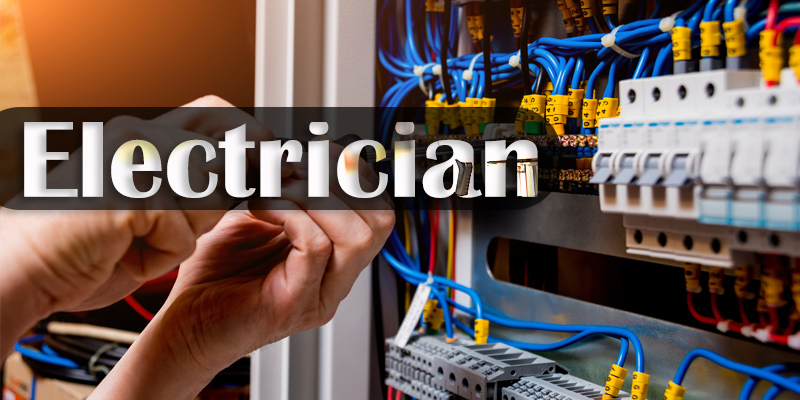
Electrician

ITI Trade: Electrician

Course Overview

This two-year Electrician trade course is offered under the Craftsman Training Scheme (CTS) by the National Council for Vocational Training (NCVT). It trains students in electrical installation, maintenance, and repair, preparing them for roles such as electrician, wireman, or electrical technician.

The course includes:

Trade Name: Wireman
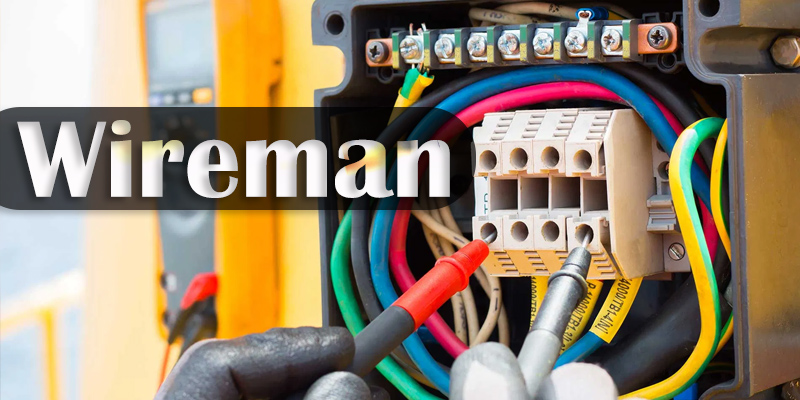
Wireman

Course Overview

  • Trade Name: Wireman
  • Duration: 2 Years (4 Semesters)
  • NSQF Level: Level 5
  • Eligibility: 8th Grade Pass
ITI Electroplater Trade
Electroplater

The ITI "Electroplater" trade is a two-year vocational training program under the Craftsman Training Scheme (CTS), governed by the National Council for Vocational Training (NCVT). This course equips trainees with skills in electroplating techniques, surface preparation, and the application of protective and decorative coatings on metal surfaces.

Electrician Power Distribution

The Electrician (Power Distribution) ITI trade is a 2-year NSQF Level 4/5 course focused on installing, operating, maintaining, and repairing electrical power distribution systems. It covers transformers, overhead lines, underground cables, switchgear, and safety procedures, preparing technicians for roles in electricity boards, utilities, and industries. 

Key Details

Lift and Escalator Mechanic
  • Trade Name: Lift and Escalator Mechanic
  • Duration: 2 Years (4 Semesters)
  • NSQF Level: Level 5
  • Eligibility: 10th Grade Pass with Science and Mathematics
By Anand | 12:00 PM IST, Mon April 28, 2025

🌍 Earth Resistance and Earth Leakage Circuit Breaker (ELCB)

🌟 Earth Resistance

Earth resistance is the resistance offered by the earth electrode to the flow of current into the ground. Lower earth resistance ensures a safe and efficient path for fault currents, protecting both equipment and human life. ⚡🛡️

🔵 Factors Affecting Earth Resistance:

  • 🌱 Soil resistivity (moisture content, temperature, and composition)
  • 📏 Depth and size of the earth electrode
  • 🛢️ Type of electrode material (Copper, GI, etc.)
  • 🌧️ Seasonal variation (dry and rainy seasons affect resistance)
  • 🏗️ Number of electrodes used and their interconnection

🛠️ Methods of Measuring Earth Resistance:

  • 🔹 Fall-of-Potential Method: A voltmeter and ammeter are used with auxiliary electrodes to measure resistance directly.
  • 🔹 Dead Earth Method: In this method, one electrode is connected to a known low-resistance system.
  • 🔹 Clamp-on Earth Tester: Modern, non-intrusive method where a clamp meter measures earth resistance without disconnecting the electrode.

🎯 Ideal Earth Resistance Values:

  • 🏠 Residential installations: Less than 5 Ohms
  • 🏢 Industrial installations: Less than 1 Ohm
  • ⚡ Power stations & Substations: Less than 0.5 Ohm

🚨 Earth Leakage Circuit Breaker (ELCB)

An Earth Leakage Circuit Breaker (ELCB) is a safety device used to prevent electric shocks by detecting leakage currents to the earth and disconnecting the power supply instantly. ⚡🔒

🔵 Types of ELCB:

  • 🔹 Voltage ELCB: Operates based on the voltage across the earth and neutral.
  • 🔹 Current ELCB (also called RCCB): Detects imbalance between live and neutral currents (Residual Current Circuit Breaker).

⚙️ Working Principle:

  • ⚡ The ELCB monitors leakage of current to the ground.
  • 🚦 If leakage exceeds a predefined limit (typically 30mA for domestic), it trips the circuit.
  • 🔌 This action disconnects the power supply and prevents potential electric shock or fire hazards.

🎯 Advantages of Using ELCB:

  • 🛡️ Provides protection against electric shocks.
  • 🔥 Prevents fire caused by current leakage.
  • 🔧 Easy to install and maintain.
  • ⚡ Fast response time enhances user safety.

❗ Important Notes:

  • 🧪 Regular testing of ELCB is necessary to ensure functionality.
  • 🔧 Proper earthing must be in place for ELCB to operate effectively.
  • 📜 Follow IEE and national electrical codes during installation.

🏁 Conclusion

Maintaining low earth resistance and installing a reliable ELCB are essential for ensuring electrical safety in homes, industries, and commercial establishments. Regular testing and proper installation practices help safeguard lives and property from electrical hazards. 🌟⚡🏠

Electrician

All Language Post

Earth resistance and earth leakage circuit breaker.

Book

  • Advantages of AC poly-phase system
  • Magnetic terms
  • First aid safety practice
  • Estimation of load, cable size, bill of material and cost.
  • PVC conduit and Casing-capping wiring system
  • I.E. rules on electrical wiring
  • Chemical effect of electric current and Laws of electrolysis
  • Comparison and Advantages of DC and AC systems
  • Laws of Resistance and various types of resistors
  • Ohm’s Law
  • Underground Cable
  • Joints in electrical conductors
  • Fundamentals of electricity, definitions, units & effects of electric current
  • Marking tools
  • Allied trades: Introduction to fitting tools, safety precautions
  • Concept of Standards and advantages of BIS/ISI
  • Scope of the electrician trade

Question Paper

Electrician
Electrician (Practical) – Semester II 18/A/C/S-2/4/E
Sem - 4 4/July/ 2018
Electrician (Practical) – Semester II 17IA/C/S-2/4/E
Sem - 2 2/July/ 2018
ITI Electrician First Semester Model Paper
Trade Theory Semester 2 JULY 2018
Trade Theory Semester 1 January 2018
Practical Examination – Semester I Session: 2017–2018
Electrician (Practical) – Semester IV 4 jan 18
Sem - 4 4/ July/2017
sem - 1 1/July/2018
Electrician (Practical) – Semester IV 4 jan 2018
Practical Examination – Semester I 1 july 2018
Electrician (Practical) – Semester II 3 july 2018
Electrician (Practical) – Semester III 3 july 2017
Electrician (Practical) – Semester III 3 jan 2018
Electrician (Practical) – Semester II 2 july 2018
Electrician (Practical) – Semester II 2 july 2017
Sem - 1 1/July/2017
ઇલેક્ટ્રિશિયન
ITI Electrician First Semester Model Paper
इलेक्ट्रीशियन
ITI इलेक्ट्रीशियन ट्रेड First Semester Model Paper
Electrician 2nd Semester Question Paper in Hindi
ITI इलेक्ट्रीशियन 4th सेमेस्टर में पूछे गए प्रश्न

Common Subject

  • Engineering Drawing
  • Employability Skills
  • Workshop Calculation Science

Directory

  • Industrial Training Institutes
  • Engineering College
  • Medical College

Knowledge Bank

  • ITI Syllabus
  • Tools

Student Friend

  • ITI Admission
  • ITI Jobs
  • ITI Hunnarbaaz
  • Get ITI Website

Trade

Electrician
Wireman
Electroplater
Electrician Power Distribution
Lift and Escalator Mechanic

Electrician + Wireman + Electroplater + Electrician Power Distribution + Lift and Escalator Mechanic | ITI Fitter | ITI COPA | ITI Welder | ITI Mechanic | ITI Electronics | Agriculture + Horticulture + Floriculture | ITI Draughtsman Civil & Mech | ITI Refrigeration & Air Conditioning | ITI Turner | ITI Plumber | ITI Machinist | ITI Cosmetology | ITI Sewing | ITI Surveyor

Copyright © 2026 ITI Directory - All rights reserved

Developed and Designed by ITI Directory