


Skip to header Skip to main navigation Skip to main content Skip to footer

User account menu

  • Log in
Home
Electrician ITI
ITI Trade Electrician, Wireman

Main navigation

  • Home
  • Book
  • Question Paper
  • Trade Syllabus
  • वायरमैन
    • WIREMAN Assessment Criteria
    • WIREMAN Course Information
    • WIREMAN General Information
    • WIREMAN Job Role
    • WIREMAN Learning Outcomes
    • WIREMAN Training System
  • इलेक्ट्रीशियन
  • ITI Tools
    • Employability Skills (opens in new tab)
    • Engineering Drawing (opens in new tab)
    • Hunnarbaaz (opens in new tab)
    • Syllabus (opens in new tab)
    • Workshop Calculation and Science (opens in new tab)

Concept of Neutral and Earth.

Breadcrumb

  • Home
  • Concept of Neutral and Earth.
  • English
  • Hindi
  • Bengali
  • Malayalam
  • Gujarati
ITI Trade: Electrician
Electrician

ITI Trade: Electrician

Course Overview

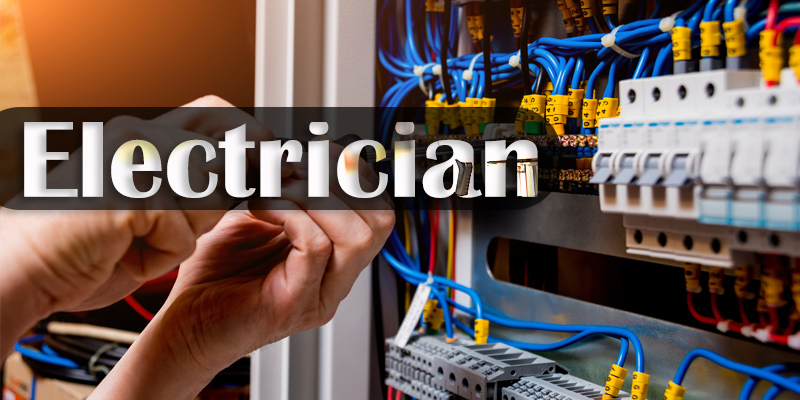
This two-year Electrician trade course is offered under the Craftsman Training Scheme (CTS) by the National Council for Vocational Training (NCVT). It trains students in electrical installation, maintenance, and repair, preparing them for roles such as electrician, wireman, or electrical technician.

The course includes:

Trade Name: Wireman
Wireman

Course Overview

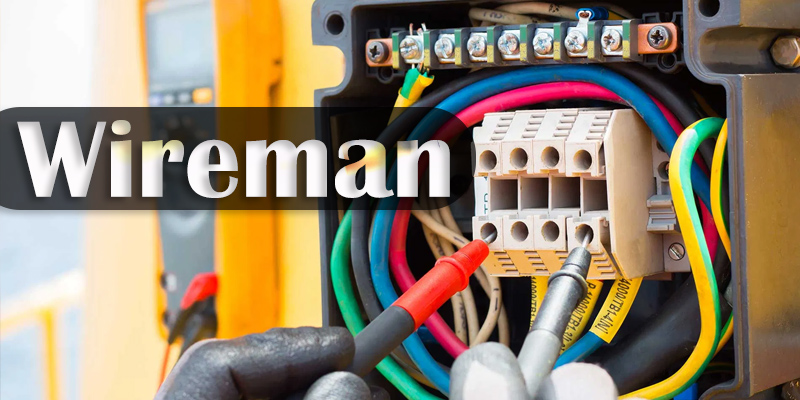
  • Trade Name: Wireman
  • Duration: 2 Years (4 Semesters)
  • NSQF Level: Level 5
  • Eligibility: 8th Grade Pass
ITI Electroplater Trade
Electroplater

The ITI "Electroplater" trade is a two-year vocational training program under the Craftsman Training Scheme (CTS), governed by the National Council for Vocational Training (NCVT). This course equips trainees with skills in electroplating techniques, surface preparation, and the application of protective and decorative coatings on metal surfaces.

Electrician Power Distribution

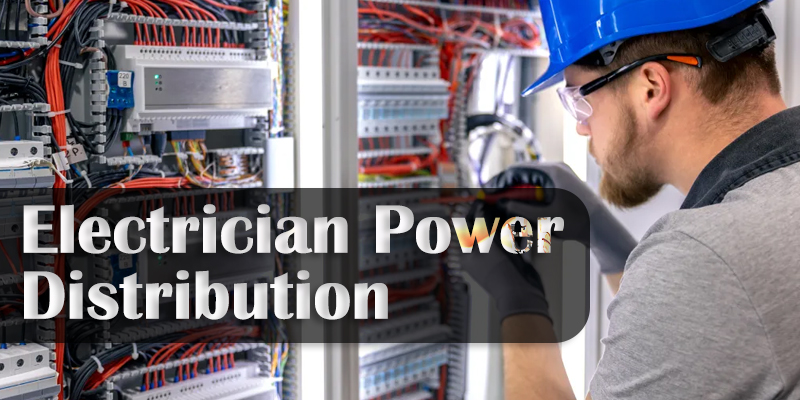
The Electrician (Power Distribution) ITI trade is a 2-year NSQF Level 4/5 course focused on installing, operating, maintaining, and repairing electrical power distribution systems. It covers transformers, overhead lines, underground cables, switchgear, and safety procedures, preparing technicians for roles in electricity boards, utilities, and industries. 

Key Details

Lift and Escalator Mechanic
  • Trade Name: Lift and Escalator Mechanic
  • Duration: 2 Years (4 Semesters)
  • NSQF Level: Level 5
  • Eligibility: 10th Grade Pass with Science and Mathematics
By Anand | 12:44 PM IST, Mon April 28, 2025

⚡ Concept of Neutral and Earth 🌍

In electrical systems, the terms **Neutral** and **Earth** (or **Ground**) are fundamental concepts for ensuring safety, stability, and proper functionality. Both components play critical roles in protecting electrical systems and the people who interact with them. In this article, we will explore what Neutral and Earth are, how they work, and their importance in electrical installations. ⚙️🔌

🔵 1. Neutral: Definition and Role

The **Neutral** wire is a conductor that completes the electrical circuit by providing a return path for the current. It is typically connected to the Earth at the main distribution board, which helps to maintain the voltage at a safe and stable level. The neutral wire serves as a reference point for the system and is used to balance the electrical load in the circuit. ⚡

1.1. Characteristics of Neutral

  • The neutral wire is usually color-coded blue or white, depending on the country.
  • Under normal conditions, the neutral wire carries current, and its voltage is close to zero, being referenced to the Earth.
  • The neutral wire is part of the circuit, completing the loop from the power source, through the appliance, and back to the source.
  • It helps balance the flow of current, especially in single-phase systems.

1.2. How Neutral Works

In a typical electrical system, the live wire carries current to the appliance, and the neutral wire provides the return path. The flow of current from the live wire to the appliance is completed by the return current flowing through the neutral wire. This balanced flow ensures that electrical appliances operate safely and efficiently. 🔄

🌍 2. Earth (Ground): Definition and Role

The **Earth** (or **Ground**) wire is a safety mechanism that provides a safe path for electrical current to flow into the ground in case of faults like short circuits or leakage of current. Its primary function is to prevent electrical shocks by ensuring that the electrical system is safely connected to the ground. 🌱

2.1. Characteristics of Earth

  • The Earth wire is typically color-coded green or green-yellow.
  • The Earth wire does not carry current under normal operation but only in the event of a fault, providing a safe escape route for fault current.
  • It helps prevent electrical shocks and fires by directing harmful electrical current into the Earth, reducing the risk of electric shock to people or damage to equipment. 🔒

2.2. Importance of Earth in Safety

If an electrical fault occurs (such as a live wire touching the metal body of an appliance), the Earth wire provides a low-resistance path for the current to flow directly to the ground. This prevents the appliance from becoming live and ensures the safety of anyone who might touch it. Earth wiring plays a vital role in safeguarding people and preventing equipment damage. 🛡️

🔗 3. Difference Between Neutral and Earth

NeutralEarth (Ground)
Neutral carries current under normal operating conditions.Earth does not carry current under normal conditions; it only carries current in the event of a fault.
Neutral is connected to the Earth at the distribution board.Earth is directly connected to the ground to provide a safe path for fault currents.
Neutral is typically color-coded blue or white.Earth is typically color-coded green or green-yellow.
Neutral provides a return path for the current in the circuit.Earth protects by directing fault current to the ground, preventing electrical shocks and fires.

🌐 4. How Neutral and Earth Work Together

Both the Neutral and Earth wires are connected to the Earth at the distribution board. However, their roles are different. While the neutral wire provides the return current in a circuit, the Earth wire protects against electrical faults by safely diverting fault currents into the ground. A proper connection of both is essential to maintain safety and efficiency in an electrical system. ⚙️

4.1. Proper Wiring is Essential

To ensure safety and proper functionality, both the neutral and Earth wires must be correctly connected to the ground at the distribution board. Any loose or improper connections can lead to dangerous conditions, such as electric shocks or fire hazards. Therefore, it is essential to regularly inspect and maintain these connections. 🔧

🔒 5. Safety Measures

  • Never confuse the neutral and Earth wires; they have distinct functions and must be connected correctly to the electrical system.
  • Always use insulated and reliable wiring materials to ensure safety.
  • Check that both the Earth and Neutral connections are intact and secure to prevent electrical hazards.
  • Do not rely solely on the neutral wire for safety. The Earth wire is the primary safety feature in the event of a fault. ⚠️

🔧 6. Conclusion

The **Neutral** and **Earth** wires are integral parts of any electrical system. While the neutral provides a return path for current, the Earth wire offers safety by directing fault current into the ground. A proper connection and maintenance of both are crucial to ensuring the safe and efficient operation of electrical systems. ⚡🛡️

Electrician

All Language Post

Concept of Neutral and Earth.

Book

  • Advantages of AC poly-phase system
  • Magnetic terms
  • First aid safety practice
  • Estimation of load, cable size, bill of material and cost.
  • PVC conduit and Casing-capping wiring system
  • I.E. rules on electrical wiring
  • Chemical effect of electric current and Laws of electrolysis
  • Comparison and Advantages of DC and AC systems
  • Laws of Resistance and various types of resistors
  • Ohm’s Law
  • Underground Cable
  • Joints in electrical conductors
  • Fundamentals of electricity, definitions, units & effects of electric current
  • Marking tools
  • Allied trades: Introduction to fitting tools, safety precautions
  • Concept of Standards and advantages of BIS/ISI
  • Scope of the electrician trade

Question Paper

Electrician
Electrician (Practical) – Semester II 18/A/C/S-2/4/E
Sem - 4 4/July/ 2018
Electrician (Practical) – Semester II 17IA/C/S-2/4/E
Sem - 2 2/July/ 2018
ITI Electrician First Semester Model Paper
Trade Theory Semester 2 JULY 2018
Trade Theory Semester 1 January 2018
Practical Examination – Semester I Session: 2017–2018
Electrician (Practical) – Semester IV 4 jan 18
Sem - 4 4/ July/2017
sem - 1 1/July/2018
Electrician (Practical) – Semester IV 4 jan 2018
Practical Examination – Semester I 1 july 2018
Electrician (Practical) – Semester II 3 july 2018
Electrician (Practical) – Semester III 3 july 2017
Electrician (Practical) – Semester III 3 jan 2018
Electrician (Practical) – Semester II 2 july 2018
Electrician (Practical) – Semester II 2 july 2017
Sem - 1 1/July/2017
ઇલેક્ટ્રિશિયન
ITI Electrician First Semester Model Paper
इलेक्ट्रीशियन
ITI इलेक्ट्रीशियन ट्रेड First Semester Model Paper
Electrician 2nd Semester Question Paper in Hindi
ITI इलेक्ट्रीशियन 4th सेमेस्टर में पूछे गए प्रश्न

Common Subject

  • Engineering Drawing
  • Employability Skills
  • Workshop Calculation Science

Directory

  • Industrial Training Institutes
  • Engineering College
  • Medical College

Knowledge Bank

  • ITI Syllabus
  • Tools

Student Friend

  • ITI Admission
  • ITI Jobs
  • ITI Hunnarbaaz
  • Get ITI Website

Trade

Electrician
Wireman
Electroplater
Electrician Power Distribution
Lift and Escalator Mechanic

Electrician + Wireman + Electroplater + Electrician Power Distribution + Lift and Escalator Mechanic | ITI Fitter | ITI COPA | ITI Welder | ITI Mechanic | ITI Electronics | Agriculture + Horticulture + Floriculture | ITI Draughtsman Civil & Mech | ITI Refrigeration & Air Conditioning | ITI Turner | ITI Plumber | ITI Machinist | ITI Cosmetology | ITI Sewing | ITI Surveyor

Copyright © 2026 ITI Directory - All rights reserved

Developed and Designed by ITI Directory