
Skip to header Skip to main navigation Skip to main content Skip to footer

User account menu

  • Log in
Home
Electrician ITI
ITI Trade Electrician, Wireman

Main navigation

  • Home
  • Book
  • Question Paper
  • Trade Syllabus
  • वायरमैन
    • WIREMAN Assessment Criteria
    • WIREMAN Course Information
    • WIREMAN General Information
    • WIREMAN Job Role
    • WIREMAN Learning Outcomes
    • WIREMAN Training System
  • इलेक्ट्रीशियन
  • ITI Tools
    • Employability Skills (opens in new tab)
    • Engineering Drawing (opens in new tab)
    • Hunnarbaaz (opens in new tab)
    • Syllabus (opens in new tab)
    • Workshop Calculation and Science (opens in new tab)

Study of wiring accessories e.g. switches, fuses, relays, MCB, ELCB, MCCB etc. Grading of cables and current ratings

Breadcrumb

  • Home
  • I.E. rules on electrical wiring
  • Study of wiring accessories e.g. switches, fuses, relays, MCB, ELCB, MCCB etc. Grading of cables and current ratings
  • English
  • Hindi
  • Bengali
  • Malayalam
  • Gujarati
ITI Trade: Electrician
Electrician

ITI Trade: Electrician

Course Overview

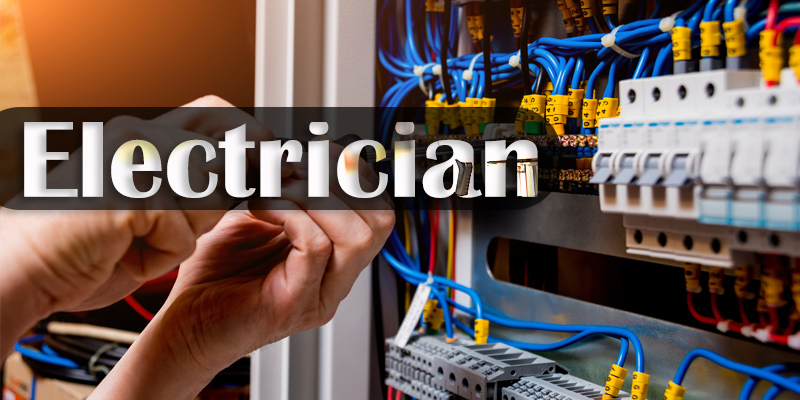
This two-year Electrician trade course is offered under the Craftsman Training Scheme (CTS) by the National Council for Vocational Training (NCVT). It trains students in electrical installation, maintenance, and repair, preparing them for roles such as electrician, wireman, or electrical technician.

The course includes:

Trade Name: Wireman
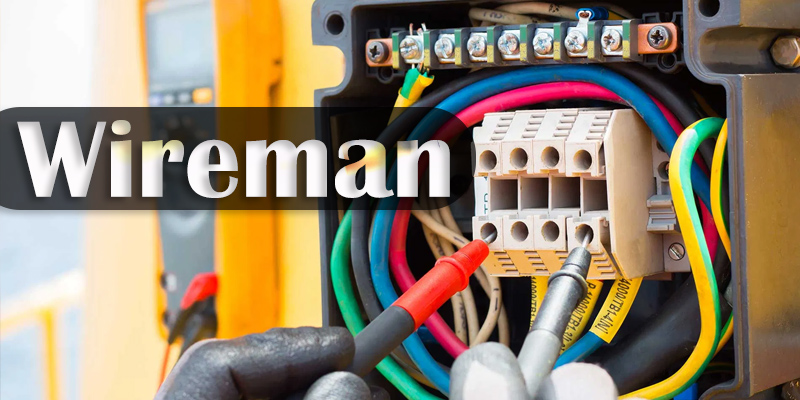
Wireman

Course Overview

  • Trade Name: Wireman
  • Duration: 2 Years (4 Semesters)
  • NSQF Level: Level 5
  • Eligibility: 8th Grade Pass
ITI Electroplater Trade
Electroplater

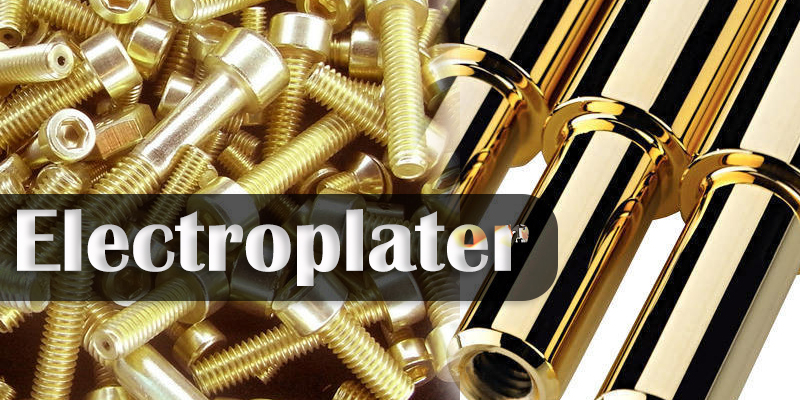
The ITI "Electroplater" trade is a two-year vocational training program under the Craftsman Training Scheme (CTS), governed by the National Council for Vocational Training (NCVT). This course equips trainees with skills in electroplating techniques, surface preparation, and the application of protective and decorative coatings on metal surfaces.

Electrician Power Distribution

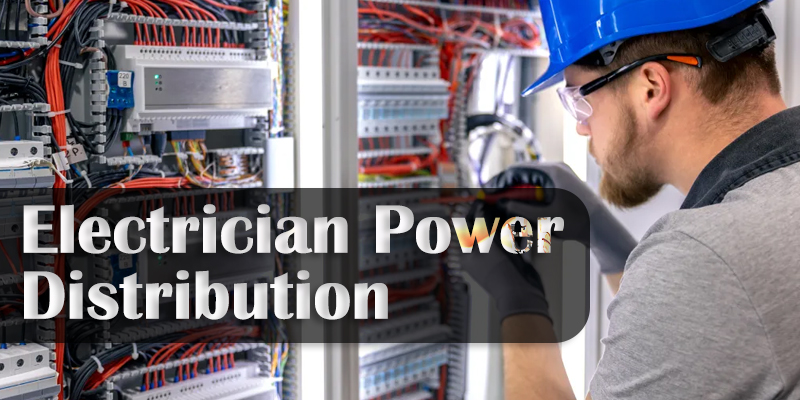
The Electrician (Power Distribution) ITI trade is a 2-year NSQF Level 4/5 course focused on installing, operating, maintaining, and repairing electrical power distribution systems. It covers transformers, overhead lines, underground cables, switchgear, and safety procedures, preparing technicians for roles in electricity boards, utilities, and industries. 

Key Details

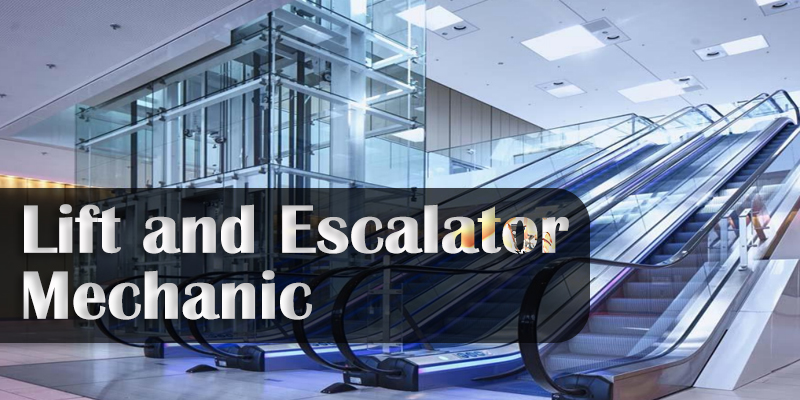
Lift and Escalator Mechanic
  • Trade Name: Lift and Escalator Mechanic
  • Duration: 2 Years (4 Semesters)
  • NSQF Level: Level 5
  • Eligibility: 10th Grade Pass with Science and Mathematics
By Anand | 4:24 PM IST, Sat April 26, 2025

⚡🎯 Study of Wiring Accessories and Grading of Cables with Current Ratings

🔍 Introduction

Wiring accessories are essential components in electrical installations that ensure control, safety, and convenience. Understanding their types, uses, and selection criteria is critical for safe and efficient electrical systems, whether in domestic or industrial environments. 🏠🏭

⚙️ Wiring Accessories

1️⃣ Switches

✅ Devices used to make or break an electrical circuit manually or automatically. 🔘

  • 🔸 Types: Toggle Switch, Push Button Switch, Rocker Switch, Rotary Switch, etc.
  • 🔸 Application: Lighting control, machinery control, emergency operations.
  • 🔸 Key Point: Always select switches rated for the voltage and current they will handle.

2️⃣ Fuses

✅ A protective device that melts and breaks the circuit if the current exceeds a safe value. 🛡️

  • 🔸 Types: Cartridge Fuse, Rewirable Fuse, Drop-out Fuse, HRC (High Rupturing Capacity) Fuse.
  • 🔸 Function: Prevent damage from short circuits and overcurrent.
  • 🔸 Important: Fuses must be rated slightly higher than the normal operating current.

3️⃣ Relays

✅ Electrically operated switches that control a circuit by a low-power signal or multiple circuits. 🔁

  • 🔸 Types: Electromagnetic Relay, Thermal Relay, Solid State Relay, Reed Relay.
  • 🔸 Applications: Automation, motor control, electrical protection circuits.

4️⃣ MCB (Miniature Circuit Breaker)

✅ An automatically operated electrical switch designed to protect an electrical circuit from damage caused by excess current. 🧯

  • 🔸 Function: Trips and breaks the circuit during overload or short-circuit conditions.
  • 🔸 Advantages: Reusable after fault rectification, more reliable than fuses.
  • 🔸 Common Ratings: 6A, 16A, 32A, 63A.

5️⃣ ELCB (Earth Leakage Circuit Breaker)

✅ A safety device that cuts off electricity supply when it detects earth leakage current. 🌎🛡️

  • 🔸 Function: Protects against electric shocks and prevents fire risks due to leakage.
  • 🔸 Types: Voltage-operated and Current-operated ELCB.

6️⃣ MCCB (Moulded Case Circuit Breaker)

✅ A type of electrical protection device that can handle larger currents (upto 2500A). ⚡

  • 🔸 Function: Protection against overload, short circuit, and earth fault in industrial circuits.
  • 🔸 Applications: Factories, large commercial buildings, heavy machines.

📏 Grading of Cables and Current Ratings

🔹 What is Cable Grading?

Cable grading is the classification of cables based on their voltage handling capacity and insulation properties. Correct grading ensures durability, safety, and proper system performance. 🧰

Common Cable Grades:

  • 🔸 Low Tension (LT) Cables: Voltage up to 1kV (1000V).
  • 🔸 High Tension (HT) Cables: Voltage between 1kV to 11kV.
  • 🔸 Extra High Tension (EHT) Cables: Voltage between 33kV to 66kV.
  • 🔸 Super Tension (ST) Cables: Voltage between 22kV to 33kV.

🔹 Current Rating of Cables

The current carrying capacity of a cable depends on various factors like:

  • 🔸 Cross-sectional area of the conductor (thicker cables carry more current).
  • 🔸 Insulation type and temperature rating.
  • 🔸 Installation conditions (buried underground, inside conduit, open-air, etc.).
  • 🔸 Ambient temperature.

Examples of Cable Current Ratings:

Conductor Size (Sq.mm)Approx Current Capacity (Amps)
1.5 Sq.mm10 - 15 Amps
2.5 Sq.mm18 - 24 Amps
4.0 Sq.mm24 - 32 Amps
6.0 Sq.mm32 - 40 Amps
10.0 Sq.mm50 - 65 Amps

🌟 Important Points to Remember

  • 🧰 Always select wiring accessories that match the circuit voltage and current requirements.
  • ⚡ Properly grade cables according to system voltage and environmental conditions.
  • 🛡️ Use ISI or IEC certified products to ensure reliability and safety.
  • 🔍 Periodic testing and maintenance of protective devices like MCBs, ELCBs, and MCCBs are necessary.

🎯 Conclusion

Understanding wiring accessories and cable grading is crucial for designing safe, efficient, and long-lasting electrical systems. Correct selection of switches, fuses, circuit breakers, and cables not only improves performance but also ensures protection against accidents and failures. 🚀✅

Electrician
  • Printer-friendly version

Book traversal links for Study of wiring accessories e.g. switches, fuses, relays, MCB, ELCB, MCCB etc. Grading of cables and current ratings

  • ‹ Principle of laying out of domestic wiring
  • Up
  • Types of domestic and industrial wirings ›

All Language Post

Study of wiring accessories e.g. switches, fuses, relays, MCB, ELCB, MCCB etc. Grading of cables and current ratings

Book navigation

  • Principle of laying out of domestic wiring
  • Study of wiring accessories e.g. switches, fuses, relays, MCB, ELCB, MCCB etc. Grading of cables and current ratings
  • Types of domestic and industrial wirings
  • Voltage drop concept

Book

  • Advantages of AC poly-phase system
  • Magnetic terms
  • First aid safety practice
  • Estimation of load, cable size, bill of material and cost.
  • PVC conduit and Casing-capping wiring system
  • I.E. rules on electrical wiring
  • Chemical effect of electric current and Laws of electrolysis
  • Comparison and Advantages of DC and AC systems
  • Laws of Resistance and various types of resistors
  • Ohm’s Law
  • Underground Cable
  • Joints in electrical conductors
  • Fundamentals of electricity, definitions, units & effects of electric current
  • Marking tools
  • Allied trades: Introduction to fitting tools, safety precautions
  • Concept of Standards and advantages of BIS/ISI
  • Scope of the electrician trade

Question Paper

Electrician
Electrician (Practical) – Semester II 18/A/C/S-2/4/E
Sem - 4 4/July/ 2018
Electrician (Practical) – Semester II 17IA/C/S-2/4/E
Sem - 2 2/July/ 2018
ITI Electrician First Semester Model Paper
Trade Theory Semester 2 JULY 2018
Trade Theory Semester 1 January 2018
Practical Examination – Semester I Session: 2017–2018
Electrician (Practical) – Semester IV 4 jan 18
Sem - 4 4/ July/2017
sem - 1 1/July/2018
Electrician (Practical) – Semester IV 4 jan 2018
Practical Examination – Semester I 1 july 2018
Electrician (Practical) – Semester II 3 july 2018
Electrician (Practical) – Semester III 3 july 2017
Electrician (Practical) – Semester III 3 jan 2018
Electrician (Practical) – Semester II 2 july 2018
Electrician (Practical) – Semester II 2 july 2017
Sem - 1 1/July/2017
ઇલેક્ટ્રિશિયન
ITI Electrician First Semester Model Paper
इलेक्ट्रीशियन
ITI इलेक्ट्रीशियन ट्रेड First Semester Model Paper
Electrician 2nd Semester Question Paper in Hindi
ITI इलेक्ट्रीशियन 4th सेमेस्टर में पूछे गए प्रश्न

Common Subject

  • Engineering Drawing
  • Employability Skills
  • Workshop Calculation Science

Directory

  • Industrial Training Institutes
  • Engineering College
  • Medical College

Knowledge Bank

  • ITI Syllabus
  • Tools

Student Friend

  • ITI Admission
  • ITI Jobs
  • ITI Hunnarbaaz
  • Get ITI Website

Trade

Electrician
Wireman
Electroplater
Electrician Power Distribution
Lift and Escalator Mechanic

Electrician + Wireman + Electroplater + Electrician Power Distribution + Lift and Escalator Mechanic | ITI Fitter | ITI COPA | ITI Welder | ITI Mechanic | ITI Electronics | Agriculture + Horticulture + Floriculture | ITI Draughtsman Civil & Mech | ITI Refrigeration & Air Conditioning | ITI Turner | ITI Plumber | ITI Machinist | ITI Cosmetology | ITI Sewing | ITI Surveyor

Copyright © 2026 ITI Directory - All rights reserved

Developed and Designed by ITI Directory