


Skip to header Skip to main navigation Skip to main content Skip to footer

User account menu

  • Log in
Home
Electrician ITI
ITI Trade Electrician, Wireman

Main navigation

  • Home
  • Book
  • Question Paper
  • Trade Syllabus
  • वायरमैन
    • WIREMAN Assessment Criteria
    • WIREMAN Course Information
    • WIREMAN General Information
    • WIREMAN Job Role
    • WIREMAN Learning Outcomes
    • WIREMAN Training System
  • इलेक्ट्रीशियन
  • ITI Tools
    • Employability Skills (opens in new tab)
    • Engineering Drawing (opens in new tab)
    • Hunnarbaaz (opens in new tab)
    • Syllabus (opens in new tab)
    • Workshop Calculation and Science (opens in new tab)

Series and parallel circuits

Breadcrumb

  • Home
  • Ohm’s Law
  • Series and parallel circuits
  • English
  • Hindi
  • Bengali
  • Malayalam
  • Gujarati
ITI Trade: Electrician
Electrician

ITI Trade: Electrician

Course Overview

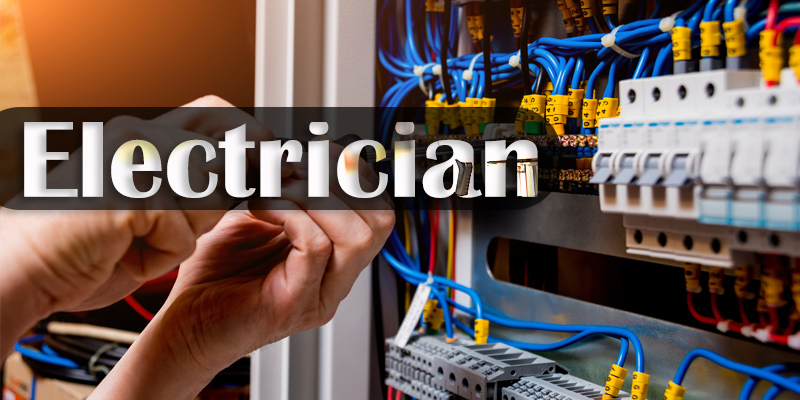
This two-year Electrician trade course is offered under the Craftsman Training Scheme (CTS) by the National Council for Vocational Training (NCVT). It trains students in electrical installation, maintenance, and repair, preparing them for roles such as electrician, wireman, or electrical technician.

The course includes:

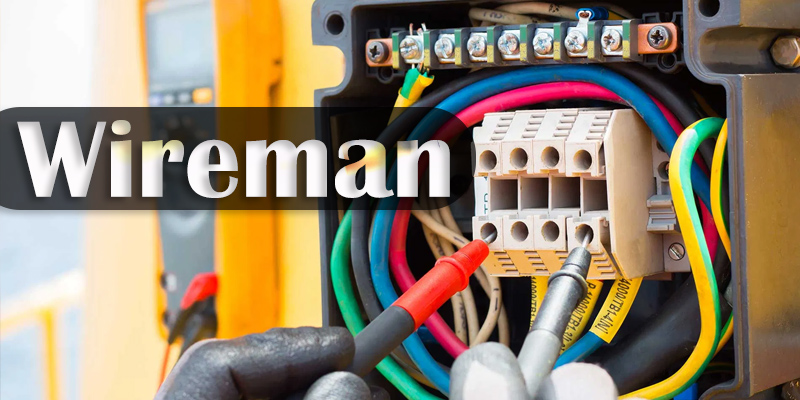
Trade Name: Wireman
Wireman

Course Overview

  • Trade Name: Wireman
  • Duration: 2 Years (4 Semesters)
  • NSQF Level: Level 5
  • Eligibility: 8th Grade Pass
ITI Electroplater Trade
Electroplater

The ITI "Electroplater" trade is a two-year vocational training program under the Craftsman Training Scheme (CTS), governed by the National Council for Vocational Training (NCVT). This course equips trainees with skills in electroplating techniques, surface preparation, and the application of protective and decorative coatings on metal surfaces.

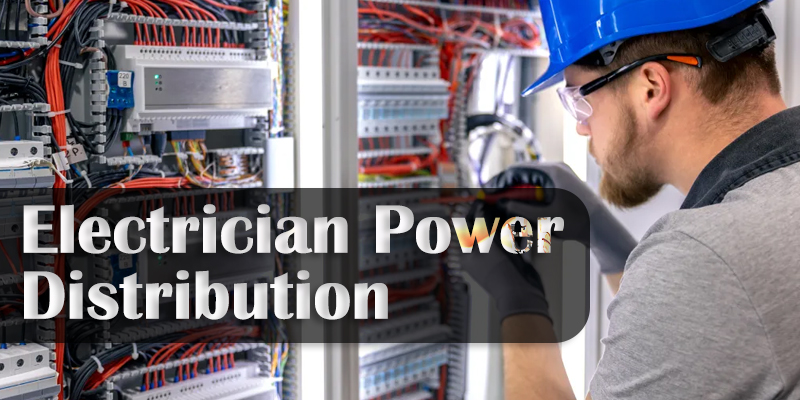
Electrician Power Distribution

The Electrician (Power Distribution) ITI trade is a 2-year NSQF Level 4/5 course focused on installing, operating, maintaining, and repairing electrical power distribution systems. It covers transformers, overhead lines, underground cables, switchgear, and safety procedures, preparing technicians for roles in electricity boards, utilities, and industries. 

Key Details

Lift and Escalator Mechanic
  • Trade Name: Lift and Escalator Mechanic
  • Duration: 2 Years (4 Semesters)
  • NSQF Level: Level 5
  • Eligibility: 10th Grade Pass with Science and Mathematics
By Anand | 2:35 PM IST, Sat April 26, 2025

🔌 Series and Parallel Circuits ⚡

In the world of electrical circuits, the configuration of components determines how current and voltage behave. Two of the most basic and commonly used circuit configurations are Series Circuits and Parallel Circuits. Each configuration has its own set of characteristics and applications. Let's explore them in detail! 🧑‍🔧

🔑 What is a Series Circuit?

A series circuit is a type of electrical circuit in which components are connected end-to-end, one after the other. In a series circuit, the same current flows through all components, but the voltage is divided across them.

⚡ Key Characteristics of Series Circuits:

  • All components are connected in a single path.
  • The current is the same through all components (I₁ = I₂ = I₃).
  • The total voltage is the sum of the individual voltage drops across each component (V₁ + V₂ + V₃ = Vtotal).
  • If one component fails, the entire circuit stops working (open circuit). 🚫

🧮 Formula for Total Resistance in Series:

The total resistance (Rtotal) in a series circuit is the sum of the individual resistances:

Rtotal = R₁ + R₂ + R₃ + ... + Rn

⚙️ Example of a Series Circuit:

Consider a simple series circuit with three resistors of values 4Ω, 6Ω, and 10Ω connected in series. The total resistance in the circuit would be:

Rtotal = 4Ω + 6Ω + 10Ω = 20Ω

Since the same current flows through all components, the voltage drop across each resistor would depend on its resistance. 🔋

🔑 What is a Parallel Circuit?

A parallel circuit is a type of electrical circuit in which the components are connected across common points, creating multiple paths for current to flow. In parallel circuits, the voltage across each component is the same, but the current is divided among the components.

⚡ Key Characteristics of Parallel Circuits:

  • All components are connected in separate branches.
  • The voltage across each component is the same (V₁ = V₂ = V₃).
  • The total current is the sum of the currents through each branch (I₁ + I₂ + I₃ = Itotal).
  • If one component fails, the rest of the circuit continues to operate (closed circuit). 👍

🧮 Formula for Total Resistance in Parallel:

The total resistance (Rtotal) in a parallel circuit can be calculated using the reciprocal formula:

1 / Rtotal = 1 / R₁ + 1 / R₂ + 1 / R₃ + ... + 1 / Rn

⚙️ Example of a Parallel Circuit:

Consider a parallel circuit with three resistors of 4Ω, 6Ω, and 10Ω. The total resistance would be:

1 / Rtotal = 1 / 4Ω + 1 / 6Ω + 1 / 10Ω

Now calculate Rtotal:

1 / Rtotal = 0.25 + 0.167 + 0.1 = 0.517
Rtotal ≈ 1.93Ω

Thus, the total resistance of the circuit is approximately 1.93Ω. 😲

⚙️ Series vs Parallel Circuits

Here’s a quick comparison between the two types of circuits:

FeatureSeries CircuitParallel Circuit
CurrentSame current flows through all components.Current divides among the branches.
VoltageVoltage is divided among components.Voltage across each component is the same.
Total ResistanceRtotal = R₁ + R₂ + ...1 / Rtotal = 1 / R₁ + 1 / R₂ + ...
Effect of Component FailureIf one component fails, the whole circuit stops.If one component fails, the rest of the circuit continues to work.

🛠️ Applications of Series and Parallel Circuits

Both series and parallel circuits have important applications in everyday life:

🔌 Series Circuit Applications:

  • Christmas Lights: In some old-fashioned Christmas light strings, the lights are wired in series. If one bulb goes out, the entire string stops working. 🎄
  • Fuses: Fuses are designed to be connected in series with a circuit to protect it from overload. If the current exceeds the rated value, the fuse blows, stopping the current flow. 🔥

🔋 Parallel Circuit Applications:

  • Home Wiring: In homes, electrical appliances are connected in parallel. This ensures that each appliance receives the same voltage and can be turned on or off independently. 🏠
  • Battery Connections: Batteries are often connected in parallel in devices to increase battery life without changing the voltage. 📱
  • Electrical Distribution Networks: Power grids use parallel circuits to distribute electricity to different areas without affecting the overall system if one part fails. ⚡

💡 Conclusion

Understanding the differences between series and parallel circuits is crucial for electrical engineers, technicians, and anyone working with electrical systems. Each type of circuit has its specific advantages and applications, and both are used extensively in electrical design. Whether you are working on a simple lighting system or a complex electrical grid, knowing how these circuits work will help you design efficient and safe systems. ⚙️

Both series and parallel circuits play important roles in electrical engineering and are foundational concepts that will be used in many future applications. 🔧⚡

Electrician
  • Printer-friendly version

Book traversal links for Series and parallel circuits

  • ‹ Kirchoff’s Laws and applications
  • Up
  • Open and short circuits in series and parallel networks ›

All Language Post

Series and parallel circuits

Book navigation

  • Simple electrical circuits and problems
  • Kirchoff’s Laws and applications
  • Series and parallel circuits
  • Open and short circuits in series and parallel networks

Book

  • Advantages of AC poly-phase system
  • Magnetic terms
  • First aid safety practice
  • Estimation of load, cable size, bill of material and cost.
  • PVC conduit and Casing-capping wiring system
  • I.E. rules on electrical wiring
  • Chemical effect of electric current and Laws of electrolysis
  • Comparison and Advantages of DC and AC systems
  • Laws of Resistance and various types of resistors
  • Ohm’s Law
  • Underground Cable
  • Joints in electrical conductors
  • Fundamentals of electricity, definitions, units & effects of electric current
  • Marking tools
  • Allied trades: Introduction to fitting tools, safety precautions
  • Concept of Standards and advantages of BIS/ISI
  • Scope of the electrician trade

Question Paper

Electrician
Electrician (Practical) – Semester II 18/A/C/S-2/4/E
Sem - 4 4/July/ 2018
Electrician (Practical) – Semester II 17IA/C/S-2/4/E
Sem - 2 2/July/ 2018
ITI Electrician First Semester Model Paper
Trade Theory Semester 2 JULY 2018
Trade Theory Semester 1 January 2018
Practical Examination – Semester I Session: 2017–2018
Electrician (Practical) – Semester IV 4 jan 18
Sem - 4 4/ July/2017
sem - 1 1/July/2018
Electrician (Practical) – Semester IV 4 jan 2018
Practical Examination – Semester I 1 july 2018
Electrician (Practical) – Semester II 3 july 2018
Electrician (Practical) – Semester III 3 july 2017
Electrician (Practical) – Semester III 3 jan 2018
Electrician (Practical) – Semester II 2 july 2018
Electrician (Practical) – Semester II 2 july 2017
Sem - 1 1/July/2017
ઇલેક્ટ્રિશિયન
ITI Electrician First Semester Model Paper
इलेक्ट्रीशियन
ITI इलेक्ट्रीशियन ट्रेड First Semester Model Paper
Electrician 2nd Semester Question Paper in Hindi
ITI इलेक्ट्रीशियन 4th सेमेस्टर में पूछे गए प्रश्न

Common Subject

  • Engineering Drawing
  • Employability Skills
  • Workshop Calculation Science

Directory

  • Industrial Training Institutes
  • Engineering College
  • Medical College

Knowledge Bank

  • ITI Syllabus
  • Tools

Student Friend

  • ITI Admission
  • ITI Jobs
  • ITI Hunnarbaaz
  • Get ITI Website

Trade

Electrician
Wireman
Electroplater
Electrician Power Distribution
Lift and Escalator Mechanic

Electrician + Wireman + Electroplater + Electrician Power Distribution + Lift and Escalator Mechanic | ITI Fitter | ITI COPA | ITI Welder | ITI Mechanic | ITI Electronics | Agriculture + Horticulture + Floriculture | ITI Draughtsman Civil & Mech | ITI Refrigeration & Air Conditioning | ITI Turner | ITI Plumber | ITI Machinist | ITI Cosmetology | ITI Sewing | ITI Surveyor

Copyright © 2026 ITI Directory - All rights reserved

Developed and Designed by ITI Directory