

Skip to header Skip to main navigation Skip to main content Skip to footer

User account menu

  • Log in
Home
Electrician ITI
ITI Trade Electrician, Wireman

Main navigation

  • Home
  • Book
  • Question Paper
  • Trade Syllabus
  • वायरमैन
    • WIREMAN Assessment Criteria
    • WIREMAN Course Information
    • WIREMAN General Information
    • WIREMAN Job Role
    • WIREMAN Learning Outcomes
    • WIREMAN Training System
  • इलेक्ट्रीशियन
  • ITI Tools
    • Employability Skills (opens in new tab)
    • Engineering Drawing (opens in new tab)
    • Hunnarbaaz (opens in new tab)
    • Syllabus (opens in new tab)
    • Workshop Calculation and Science (opens in new tab)

Electrostatics: CapacitorDifferent types, functions, grouping and uses

Breadcrumb

  • Home
  • Magnetic terms
  • Electrostatics: CapacitorDifferent types, functions, grouping and uses
  • English
  • Hindi
  • Bengali
  • Malayalam
  • Gujarati
ITI Trade: Electrician
Electrician

ITI Trade: Electrician

Course Overview

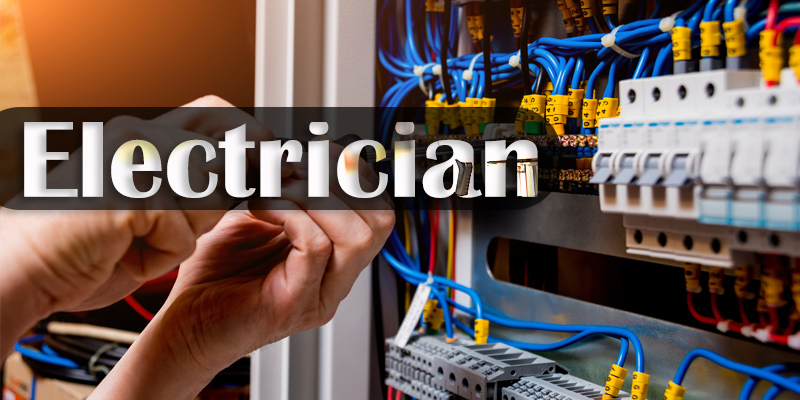
This two-year Electrician trade course is offered under the Craftsman Training Scheme (CTS) by the National Council for Vocational Training (NCVT). It trains students in electrical installation, maintenance, and repair, preparing them for roles such as electrician, wireman, or electrical technician.

The course includes:

Trade Name: Wireman
Wireman

Course Overview

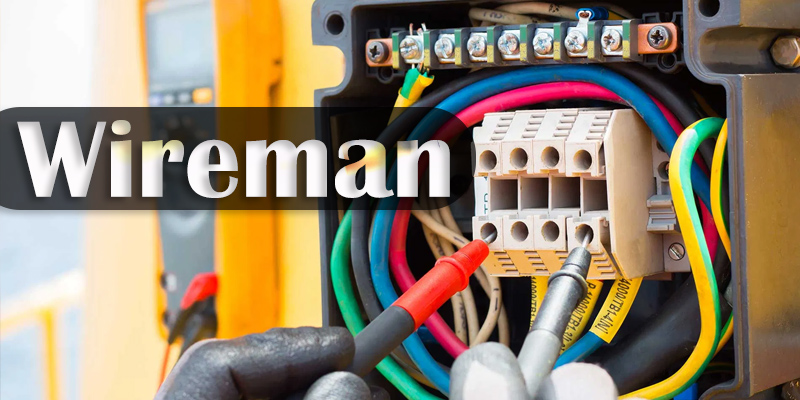
  • Trade Name: Wireman
  • Duration: 2 Years (4 Semesters)
  • NSQF Level: Level 5
  • Eligibility: 8th Grade Pass
ITI Electroplater Trade
Electroplater

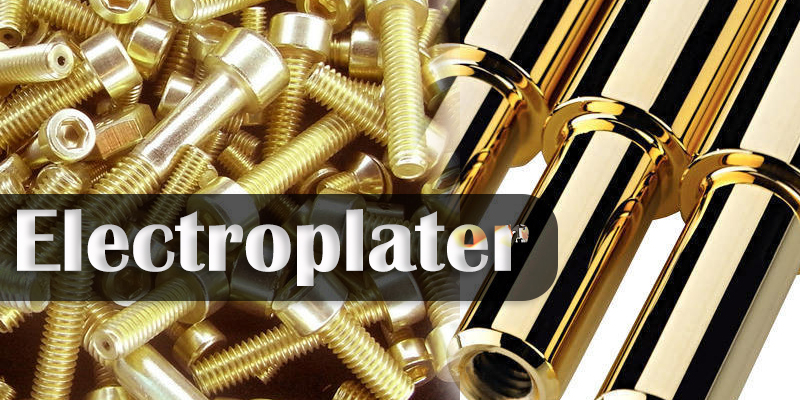
The ITI "Electroplater" trade is a two-year vocational training program under the Craftsman Training Scheme (CTS), governed by the National Council for Vocational Training (NCVT). This course equips trainees with skills in electroplating techniques, surface preparation, and the application of protective and decorative coatings on metal surfaces.

Electrician Power Distribution

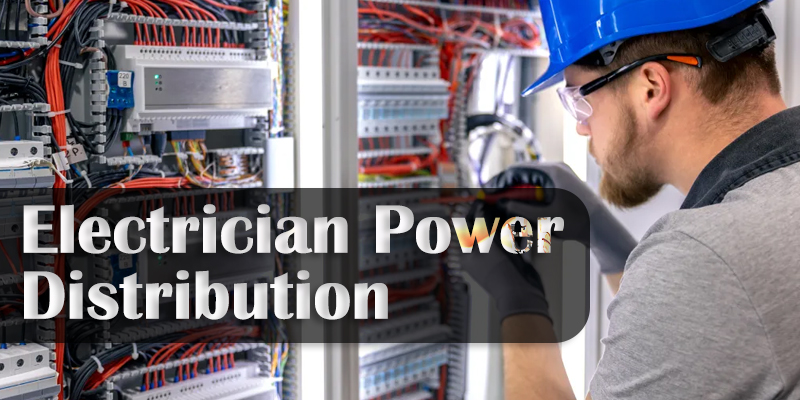
The Electrician (Power Distribution) ITI trade is a 2-year NSQF Level 4/5 course focused on installing, operating, maintaining, and repairing electrical power distribution systems. It covers transformers, overhead lines, underground cables, switchgear, and safety procedures, preparing technicians for roles in electricity boards, utilities, and industries. 

Key Details

Lift and Escalator Mechanic
  • Trade Name: Lift and Escalator Mechanic
  • Duration: 2 Years (4 Semesters)
  • NSQF Level: Level 5
  • Eligibility: 10th Grade Pass with Science and Mathematics
By Anand | 2:49 PM IST, Sat April 26, 2025

⚡ Electrostatics: Capacitors – Types, Functions, Grouping, and Uses 🔋

Capacitors are essential components in electrical circuits and devices. They store and release electrical energy when needed. In this section, we will explore the different types of capacitors, their functions, how they are grouped, and their various uses in practical applications. 📚

1. 💡 What is a Capacitor?

A capacitor is a two-terminal passive electronic component that stores electrical energy in an electric field. The storage occurs when a voltage is applied across the terminals, causing an accumulation of electric charge. This ability to store charge makes capacitors useful in a wide range of applications, from power supply systems to signal processing. ⚡

2. 🧲 Types of Capacitors

Capacitors come in various types, each designed for specific applications. The most common types include:

  • Fixed Capacitors: These capacitors have a fixed capacitance value. They are widely used in circuits where the capacitance is predetermined and does not need adjustment. Examples include ceramic, film, and tantalum capacitors. 🔧
  • Variable Capacitors: These capacitors allow the capacitance to be adjusted by changing the distance between the plates or the surface area of the plates. They are typically used in tuning circuits, such as in radios and television sets. 📻
  • Electrolytic Capacitors: These are polarized capacitors and have high capacitance values. They are commonly used in power supply filters, coupling, and decoupling applications. They require proper polarity to function correctly. ⚡
  • Supercapacitors (Ultracapacitors): Supercapacitors store a much larger amount of energy compared to regular capacitors. They are used in applications requiring rapid charge/discharge cycles, such as in energy storage systems, regenerative braking, and backup power for electronic devices. 🔋
  • Paper Capacitors: These are older types of capacitors that use paper as the dielectric material. While they are now less commonly used, they are still found in vintage electrical devices. 📜

3. 🔌 Functions of a Capacitor

Capacitors perform various functions in electrical circuits, making them versatile components. The main functions include:

  • Energy Storage: Capacitors store electrical energy in the form of an electric field. When the capacitor discharges, it releases the stored energy. This makes capacitors useful for energy storage and power supply applications. 💡
  • Filtering: Capacitors are used in power supplies to filter out unwanted noise and smooth the DC output. They smooth voltage fluctuations and prevent the noise from reaching sensitive components in a circuit. 🔧
  • Decoupling: In digital circuits, capacitors are used to isolate one part of the circuit from the noise created by another part. This is known as decoupling, and it ensures stable performance. 🛠️
  • Timing and Oscillation: Capacitors are used in timing circuits and oscillators, where they control the charging and discharging cycles. This makes them essential in clock circuits and frequency generation. ⏰
  • Signal Coupling and Decoupling: Capacitors are used to couple AC signals between two stages of a circuit while blocking DC signals. They are also used to block noise signals and protect sensitive components. 📡

4. 🏗️ Grouping of Capacitors

Capacitors can be grouped either in series or parallel configurations, depending on the requirements of the circuit. Each configuration affects the overall capacitance of the group differently.

  • Series Connection: When capacitors are connected in series, the total capacitance decreases. The formula for the total capacitance (Ctotal) of capacitors in series is:
  • Parallel Connection: When capacitors are connected in parallel, the total capacitance increases. The formula for the total capacitance (Ctotal) of capacitors in parallel is:

5. 🛠️ Uses of Capacitors

Capacitors have a wide range of uses in various applications across different industries. Some of the most common uses include:

  • Power Supply Smoothing: Capacitors are used in power supplies to smooth out the ripples in the output of rectifiers. This ensures that electronic devices receive stable DC voltage. 🔋
  • Signal Processing: Capacitors are used in filters, amplifiers, and oscillators in signal processing circuits. They help filter out unwanted frequencies, amplify signals, and generate oscillations. 📶
  • Energy Storage in Backup Systems: Supercapacitors are used to store energy in uninterruptible power supply (UPS) systems, providing short-term backup power during outages. ⚡
  • Timing Circuits: Capacitors are used in timing circuits, such as those in clocks, alarms, and oscillators. The charge and discharge cycles of the capacitor determine the timing intervals. ⏰
  • Motor Start and Run Capacitors: Capacitors are used to start and run electric motors in devices like refrigerators, air conditioners, and fans. These capacitors provide the necessary torque to start the motor and help improve efficiency during operation. ⚙️
  • Noise Filtering: Capacitors help filter out electrical noise in audio systems, reducing hum and interference. 🎧
  • Voltage Regulation: Capacitors are used in voltage regulation systems to maintain a constant voltage level in circuits and prevent voltage fluctuations from affecting sensitive components. 📏

6. ⚡ Conclusion

Capacitors are essential components in modern electrical and electronic circuits. They perform a variety of important functions, including energy storage, filtering, decoupling, and signal coupling. Understanding the different types, functions, and uses of capacitors is crucial for designing and troubleshooting electrical systems. Whether in power supplies, signal processing, or energy storage, capacitors play a key role in making electronic systems more efficient and reliable. 💡

Electrician
  • Printer-friendly version

Book traversal links for Electrostatics: CapacitorDifferent types, functions, grouping and uses

  • ‹ Principles and laws of electromagnetism. Self and mutually induced EMFs
  • Up
  • Inductive and capacitive reactance, their effect on AC circuit and related vector concepts. ›

All Language Post

Electrostatics: CapacitorDifferent types, functions, grouping and uses

Book navigation

  • Magnetic terms, magnetic materials and properties of magnet
  • Principles and laws of electromagnetism. Self and mutually induced EMFs
  • Electrostatics: CapacitorDifferent types, functions, grouping and uses
  • Inductive and capacitive reactance, their effect on AC circuit and related vector concepts.

Book

  • Advantages of AC poly-phase system
  • Magnetic terms
  • First aid safety practice
  • Estimation of load, cable size, bill of material and cost.
  • PVC conduit and Casing-capping wiring system
  • I.E. rules on electrical wiring
  • Chemical effect of electric current and Laws of electrolysis
  • Comparison and Advantages of DC and AC systems
  • Laws of Resistance and various types of resistors
  • Ohm’s Law
  • Underground Cable
  • Joints in electrical conductors
  • Fundamentals of electricity, definitions, units & effects of electric current
  • Marking tools
  • Allied trades: Introduction to fitting tools, safety precautions
  • Concept of Standards and advantages of BIS/ISI
  • Scope of the electrician trade

Question Paper

Electrician
Electrician (Practical) – Semester II 18/A/C/S-2/4/E
Sem - 4 4/July/ 2018
Electrician (Practical) – Semester II 17IA/C/S-2/4/E
Sem - 2 2/July/ 2018
ITI Electrician First Semester Model Paper
Trade Theory Semester 2 JULY 2018
Trade Theory Semester 1 January 2018
Practical Examination – Semester I Session: 2017–2018
Electrician (Practical) – Semester IV 4 jan 18
Sem - 4 4/ July/2017
sem - 1 1/July/2018
Electrician (Practical) – Semester IV 4 jan 2018
Practical Examination – Semester I 1 july 2018
Electrician (Practical) – Semester II 3 july 2018
Electrician (Practical) – Semester III 3 july 2017
Electrician (Practical) – Semester III 3 jan 2018
Electrician (Practical) – Semester II 2 july 2018
Electrician (Practical) – Semester II 2 july 2017
Sem - 1 1/July/2017
ઇલેક્ટ્રિશિયન
ITI Electrician First Semester Model Paper
इलेक्ट्रीशियन
ITI इलेक्ट्रीशियन ट्रेड First Semester Model Paper
Electrician 2nd Semester Question Paper in Hindi
ITI इलेक्ट्रीशियन 4th सेमेस्टर में पूछे गए प्रश्न

Common Subject

  • Engineering Drawing
  • Employability Skills
  • Workshop Calculation Science

Directory

  • Industrial Training Institutes
  • Engineering College
  • Medical College

Knowledge Bank

  • ITI Syllabus
  • Tools

Student Friend

  • ITI Admission
  • ITI Jobs
  • ITI Hunnarbaaz
  • Get ITI Website

Trade

Electrician
Wireman
Electroplater
Electrician Power Distribution
Lift and Escalator Mechanic

Electrician + Wireman + Electroplater + Electrician Power Distribution + Lift and Escalator Mechanic | ITI Fitter | ITI COPA | ITI Welder | ITI Mechanic | ITI Electronics | Agriculture + Horticulture + Floriculture | ITI Draughtsman Civil & Mech | ITI Refrigeration & Air Conditioning | ITI Turner | ITI Plumber | ITI Machinist | ITI Cosmetology | ITI Sewing | ITI Surveyor

Copyright © 2026 ITI Directory - All rights reserved

Developed and Designed by ITI Directory