
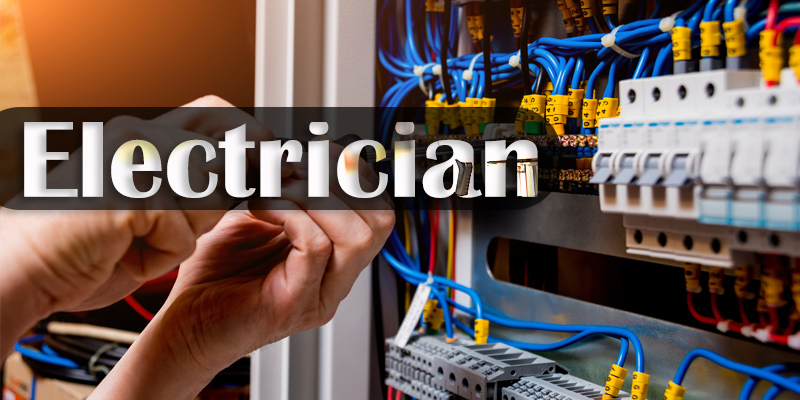



ELECTRICIAN Course Overview
The Electrician – Craft Instructor Training Scheme (CITS) course is an advanced vocational training program designed to prepare skilled professionals to become instructors in the electrical trade. The course is conducted under the guidance of the Directorate General of Training (DGT), Ministry of Skill Development and Entrepreneurship, Government of India. It is part of the national effort to strengthen vocational education and create qualified trainers who can deliver high-quality technical training in Industrial Training Institutes (ITIs) and other vocational training centers. :contentReference[oaicite:1]{index=1}
The CITS program has been operational since the early days of the Craftsmen Training Scheme (CTS). The first institute dedicated to training instructors was established in 1948. Over time, several other institutes were set up to support instructor training, including National Skill Training Institutes (NSTIs) located in cities such as Ludhiana, Kanpur, Howrah, Mumbai, Chennai, and Hyderabad. Today, the Electrician CITS program is offered in these NSTIs as well as in various DGT-affiliated Institutes for Training of Trainers (IToT) across India.
Purpose of the Electrician CITS Course
The primary objective of the Electrician CITS course is to develop highly skilled craft instructors who can effectively teach electrical trades such as Electrician and Wireman under the CTS training system. The course focuses not only on improving technical knowledge but also on enhancing instructional abilities, communication skills, and teaching methodologies.
Instructors trained through this program play an essential role in developing the future workforce of the electrical and power sectors. By acquiring advanced technical knowledge and teaching skills, trainees become capable of delivering practical training and theoretical instruction to students in vocational training institutions.
Competency-Based Training Approach
The Electrician CITS course follows a competency-based curriculum. This approach emphasizes the development of practical competencies rather than only theoretical knowledge. Trainees are expected to demonstrate their ability to perform electrical tasks, solve technical problems, and guide students in practical workshop activities.
The competency-based training model ensures that instructors are well prepared to transfer hands-on skills and industry-relevant knowledge to trainees. This system also encourages active participation and experiential learning during the training process.
Development of Instructional Skills
An important component of the Electrician CITS program is the development of instructional skills. Trainees learn how to design lesson plans, conduct demonstrations, manage workshop sessions, and evaluate student performance.
The training emphasizes the ability to communicate technical concepts in a clear and understandable manner. Trainees learn various teaching strategies that help them engage students effectively and create an interactive learning environment.
The course also focuses on developing the instructor’s ability to guide students in practical training activities. This includes demonstrating proper use of electrical tools, equipment, and safety practices in the workshop.
Promotion of Collaborative Learning
The Electrician CITS course encourages collaborative learning among trainees. Participants work together on various practical exercises, projects, and training activities. This collaborative environment helps trainees exchange ideas, solve technical problems collectively, and develop teamwork skills.
Collaborative learning also prepares instructors to manage group learning situations in their future teaching roles. By understanding how students interact and learn in groups, instructors can create more effective training sessions.
Holistic Learning Experience
The program aims to provide a holistic learning experience where trainees develop knowledge, practical skills, and professional attitudes. In addition to technical competencies, the course emphasizes values such as discipline, responsibility, and commitment to quality training.
Trainees are encouraged to adopt a lifelong learning mindset and continuously update their knowledge according to technological advancements in the electrical field. This approach ensures that instructors remain capable of teaching modern electrical technologies and practices.
Enhancing the Vocational Training Ecosystem
One of the broader goals of the Electrician CITS course is to strengthen the vocational training ecosystem in India. Skilled instructors play a crucial role in improving the quality of training provided in ITIs and other technical institutions.
By producing well-trained instructors, the program contributes to the development of skilled manpower required by industries in sectors such as power generation, electrical maintenance, manufacturing, and infrastructure development.
Career Opportunities After Completion
After successfully completing the Electrician CITS course, trainees become eligible to work as instructors in various vocational training institutes. They can teach electrical trades in Industrial Training Institutes, polytechnic colleges, and private training centers.
In addition to teaching roles, graduates of this program may also work in technical training departments of industries where they train employees in electrical maintenance and operations.
Contribution to Industry and Society
The Electrician CITS program plays an important role in building a skilled workforce that supports industrial development and economic growth. Instructors trained under this program contribute to the development of future technicians who work in electrical installation, maintenance, and power systems.
By improving the quality of vocational education, the program also helps enhance employment opportunities for young people and supports the nation’s skill development initiatives.
Conclusion
The Electrician CITS course is a specialized training program aimed at developing competent instructors for the electrical trade. Through a combination of technical training, instructional methodology, and practical experience, the course prepares trainees to become effective trainers in vocational education.
By strengthening the teaching capabilities of instructors and promoting high standards of training, the Electrician CITS program plays a vital role in the development of skilled manpower and the growth of the vocational training system in India.